Xinjiang offers families 1,000 yuan for graves without headstones
Urumqi, the capital of China’s Xinjiang Uyghur Autonomous Region, has set aside money this year to pay families who bury their dead without a grave mound or headstone, including burials of the body, the form Uyghur and other Muslim families practice, according to the city’s 2026 civil affairs budget.
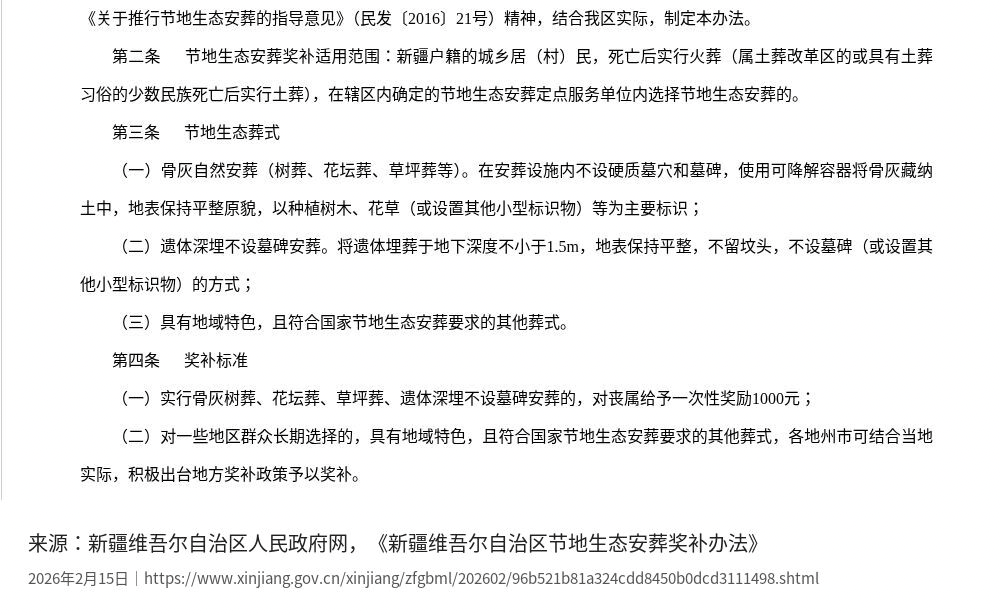
The 200,000 yuan, part of a 5 million yuan ecological burial program, funds a regional scheme that since December 2025 has offered families 1,000 yuan, about $140, to bury a relative at least 1.5 meters deep with the ground left level, no grave mound and no headstone, under rules issued by the region’s civil affairs and finance departments. A family that takes the money and later keeps a mound or puts up a headstone must repay it and is placed under “credit supervision.” The scheme marks its first year on December 1.
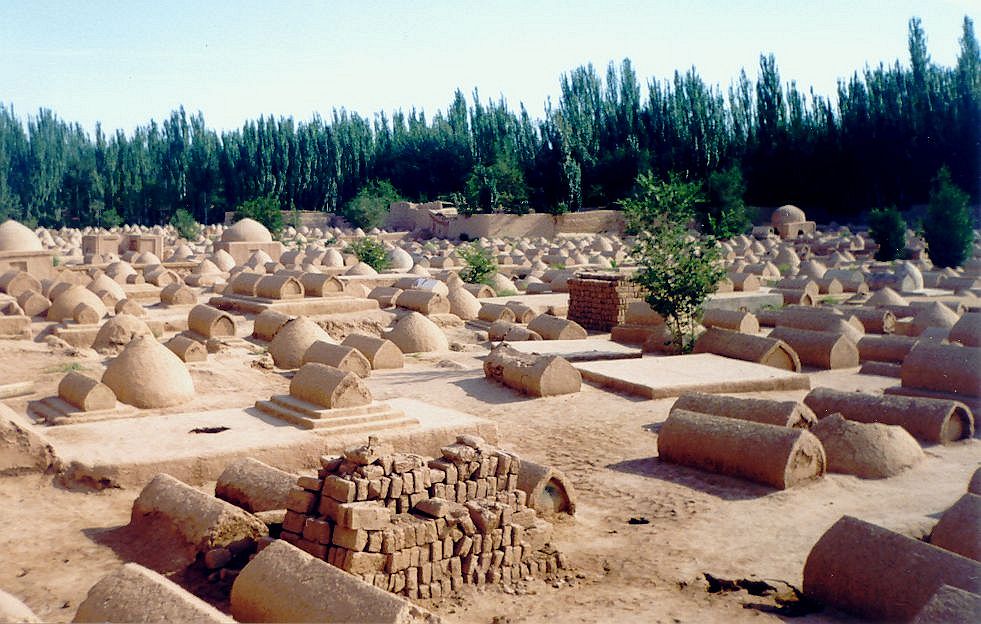
Uyghurs and nine other groups with burial customs have long been exempted from compulsory cremation under a 1999 joint ministerial interpretation, while the revised national regulations require respect for such customs. Islamic practice requires burial of the body. The new rules leave that exemption in place. What they put a price on is the grave.
Henryk Szadziewski, co-executive director of the Network for Uyghur Rights, an advocacy group, told Közet the payments appear to be “a state effort to appropriate burial ground for other purposes, given land is at a premium in the Uyghur Region.” For Uyghurs, he said, “land is set aside for cemeteries for families to visit and offer prayers to the deceased. Clearly, if the land is used for other purposes, this practice is not possible.”
He linked the incentives to the cemetery demolitions and relocations documented in the region between 2018 and 2020, which he said “not only reallocated land for commercial or residential use, but also contributed to the erasure of Uyghur connection to the land.” “The present state incentives to keep burials out of sight look consistent with both the political and economic aims of the earlier cemetery demolitions and relocations,” he said.
He also addressed Uyghurs abroad who cannot visit family graves. “The Chinese state has a clear goal of cutting ties between Uyghurs in the diaspora and their family members in the homeland,” he said. “The absence of family grave images and markers is another means of severing connections to the homeland.”
The payment equals about 6.5% of the 15,494 yuan average rural per-capita disposable income in Kashgar prefecture in 2025, according to the prefecture’s statistical bulletin.
The payment is voluntary under the rules. Families apply through a provider designated by the local civil affairs bureau, submit a death certificate, proof of burial and photographs of the site, and sign a form declaring that they chose the method of their own will. A small marker is allowed. Article 12 bars the provider “or individuals” from keeping a mound by indirect means or erecting a headstone after payment. Article 9 makes an area’s take-up of the scheme a factor when the regional department allocates money for funeral facilities, though it sets no quota.
The burial rules do not define credit supervision. Xinjiang’s Social Credit Regulation, in force since October 2024, sets a general framework for recording untrustworthy conduct and applying listed restrictions, which can include limits on government benefits, but it does not say what would apply to a family that adds a headstone. Közet could not establish whether any family has faced such a restriction.
The intended effect is stated in local documents. The civil affairs bureau of Karamay, an oil city in the north of the region, wrote in December that the payments are meant to help residents “gradually abandon the idea that traditional graves occupy land” and to “guide the public from ‘advocacy’ to ‘active choice.'” Officials describe the wider reform as a way to save land, protect the environment and cut funeral costs.
The regional Department of Civil Affairs and the Chinese Embassy in Washington did not respond to written questions. China’s foreign ministry told CNN in 2020, after the network reported more than 100 cemeteries destroyed in the region since 2018, that governments at every level respect the freedom of all ethnic groups to choose burial grounds, funerals and burial methods.
The scheme builds on a policy that ties burial to security. The region’s 2017 guidelines on “land-saving ecological burial,” still listed as in force, say the forces the government labels separatist, extremist and terrorist use funerals to spread religious extremism, and order that burial reform and “resisting the infiltration of religious extremist thought” be written together into officials’ performance assessments. The same document provides that each county may plan separate ecological cemeteries for Muslim and Han residents.
The regional government has not published how many families have taken the payment or how many were Uyghur. Korla’s 2026 civil affairs budget allocates 30,000 yuan specifically for land-saving ecological burial subsidies, enough for up to 30 payments at the 1,000-yuan rate. A combined performance table places this alongside 113,100 yuan in funeral relief, for a total of 143,100 yuan. The cases reported in state media involve ashes: Xinjiang Daily reported in April that Urumqi had recorded 637 public flowerbed burials from 2017 to the end of 2025.
Whether the scheme reaches rural Uyghurs depends on where the designated providers are. Article 5 of the rules has local bureaus name providers and report them to the region, and lets a higher-level bureau name one where none exists locally. Közet could not find a published list of providers for Kashgar or Hotan prefectures or any Uyghur-majority county.
The region has consolidated cemeteries for years. The civil affairs department reported in 2021 that a campaign against “disorderly burial” had cut the number of cemeteries in the directly administered counties of Ili from 1,037 to 657, and in Urumqi a 2019 notice ordered a Muslim cemetery of nearly 7,000 graves moved in its entirety for redevelopment.
What remains unknown is how many Uyghur families have taken the payment, whether they feel free to refuse it, and whether anyone who later changed a grave has been penalized.
Asiye Uyghur is a contributing reporter for Közet based in Europe.